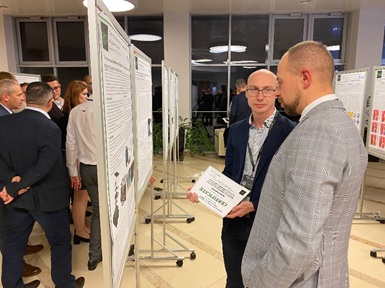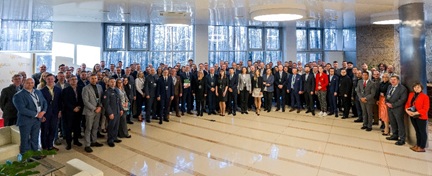
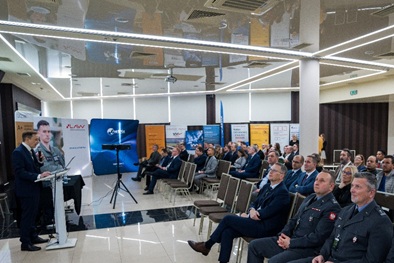
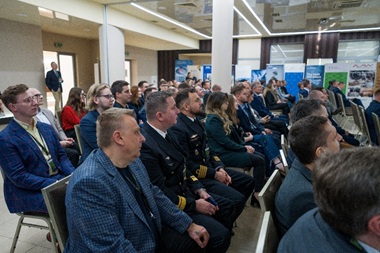
The 10th International Conference of Computational Methods in Engineering Science (CMES 2025) took place from November 19–21, 2025. The event was held at the Uroczysko Spa & Wellness Hotel in Cedzyna near Kielce, and was co-organized by, among others, the Lublin University of Technology. The program included plenary lectures, thematic sessions, three poster sessions, and networking events, connecting the scientific community with industry representatives in the fields of engineering computation, artificial intelligence, and modern simulation techniques.
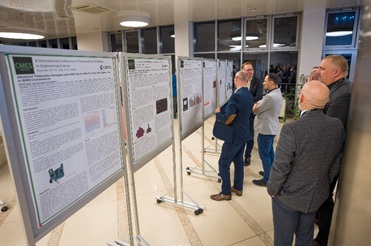
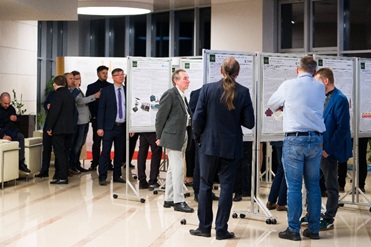
Our research team actively participated in the conference, presenting over a dozen papers on industrial and medical tomography, digital twins, wearable systems, and applications of advanced machine learning methods. The work was presented primarily in poster sessions on artificial intelligence, process simulation, and new measurement solutions.
Digital twins and metaverses for industry were presented as an advanced virtual environment developed within the TomoVerse platform. The proposed architecture combines ontological modeling with spatial scene management algorithms and user interaction, enabling consistent representation of relationships between real-world objects and their digital counterparts. The solution supports the creation of interactive digital twins of production lines, tomography systems, and complex technological installations, and provides the foundation for the emerging industrial metaverse, focused on remote training, event analysis, and development scenario design.
A significant portion of the work focused on wearable systems and tomography for medical applications. A prototype device for non-invasive monitoring of glucose, oxygen saturation, and heart rate was presented, combining tissue impedance measurements with an optical sensor based on photoplethysmography and a built-in signal processing unit. The development of machine learning algorithms for impedance tomography in urological diagnostics was also presented, as well as hybrid wearable systems combining ultrasound and impedance tomography, integrated with medical clothing. These solutions are consistent with the trend of remote patient monitoring and the development of home diagnostics based on advanced imaging.
In the area of industrial applications, advanced ultrasonic tomography systems were presented for monitoring multiphase processes and non-destructive detection of material defects. The developed multimodal tomography scanners work with transducer arrays, enabling real-time visualization of changes in the density and structure of the medium, and utilize image reconstruction methods based on the inverse problem and beamforming. These are complemented by intelligent object detection algorithms and three-dimensional reconstruction procedures, enabling precise localization of defects within objects and supporting the implementation of Industry 4.0 solutions in sectors with high quality requirements.